WELCOME TO NACTURE
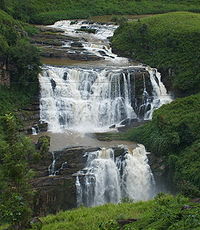
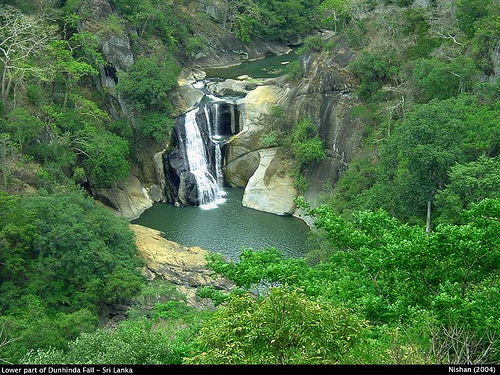
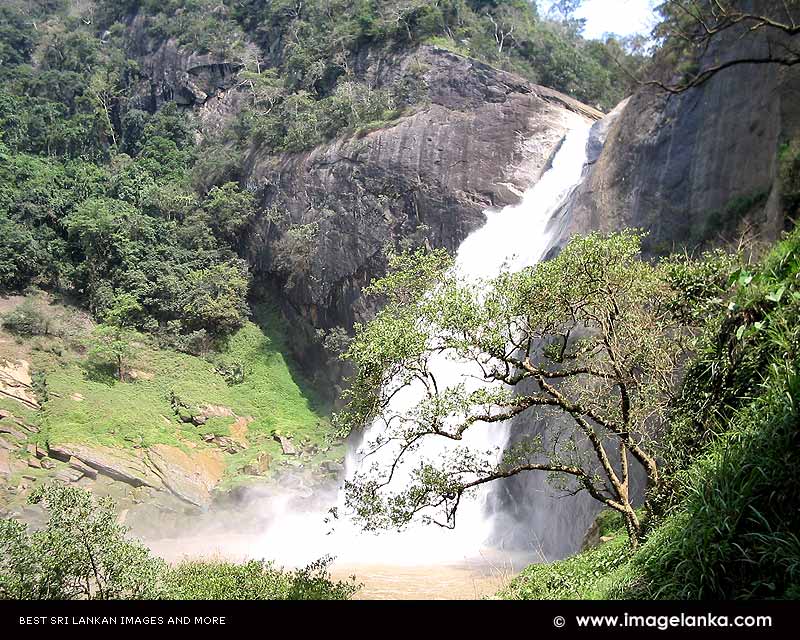
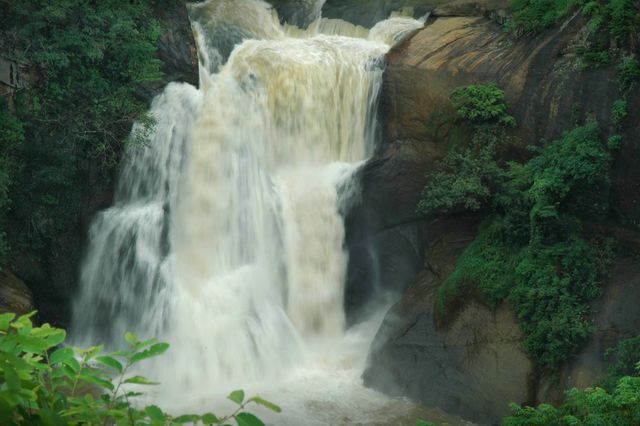
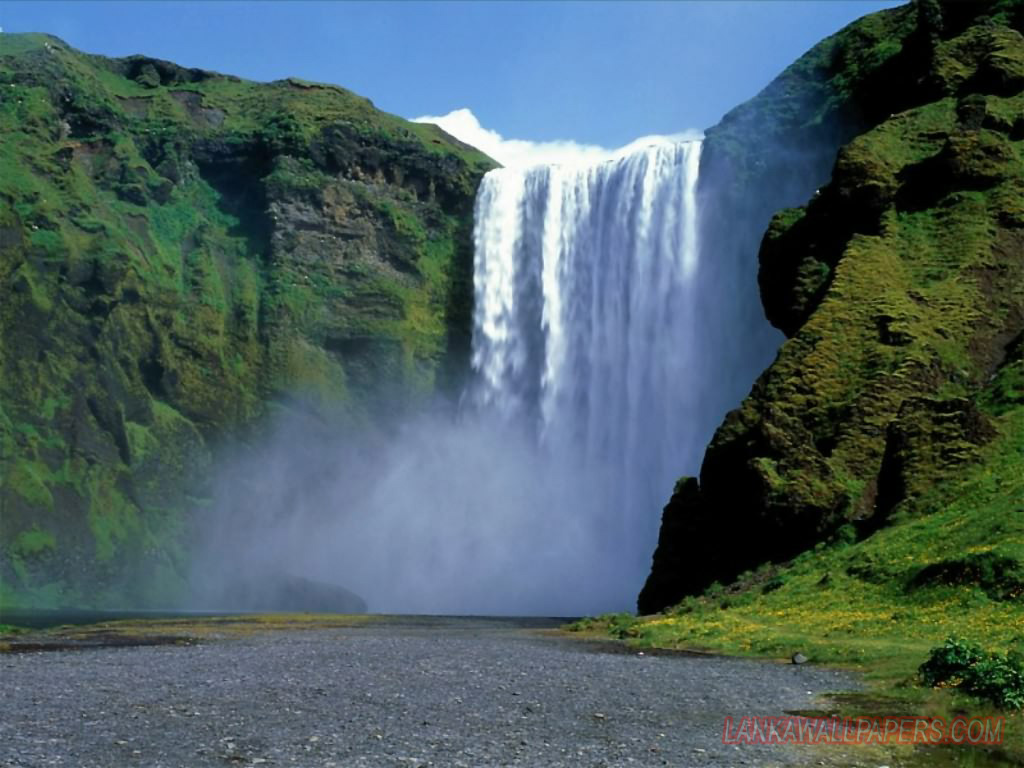
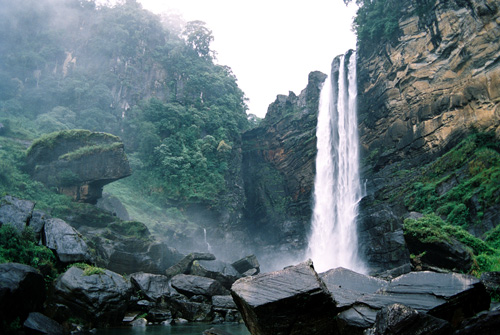
WATER FALLS OF SRI LANKA
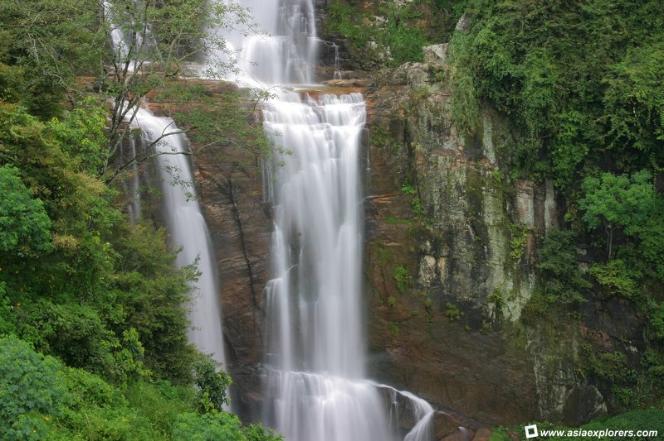
The island is blessed with 103 rivers and streams radiating from the
central hills, rushing down rocky precipices forming a number of roaring
waterfalls of Sri Lanka, various shapes and heights, all ending up loosing the momentum at the Indian Ocean.
Here are some of the most picturesque waterfalls, out of which only a
few can be viewed with ease, where as the others can only be seen by
penetrating thick forests and tea plantations.
Baker's Waterfalls
The Baker's Falls in the Horton Plains gets its water from the Belihul Oya. It is close to World's End. The icy waters glisten in the sunshine amid a backdrop of mountain terrain and deep valleys and the patna through which you traverse give it contrast. If you are lucky you may see the rare black monkey and rhododendrons in bloom.
Bambarakanda Ella
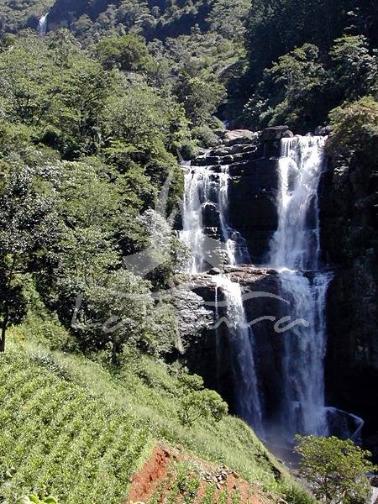
Sri Lanka is blessed with over one hundred waterfalls. The tallest is
the Bambarakande Falls which cascades down 263 metres like liquid light.
It is only four miles away from the Colombo-Bandarawela road in a forest glade, but it is not visited often, though well worth the trip.
Bambarakande is taller than the famous Diyaluma falls which is only 220
metres but thought to be the tallest waterfall in Sri Lanka. The
Diyaluma or Diya Haluma collects its water from the Poonagala Oya in the
vicinity of Koslanda and Wellawaya. Located six miles from Koslanda and
13 miles from Wellawaya, its waters originate from the Mahakande Pass
in Koslanda. You can see this waterfall if you stop a while on your way
to Haputale and detour.
Due to the geological formation of Sri Lanka, the central highlands are
surrounded by peneplains, plateaus and valleys. Rainfall sends a large
volume of water hurtling down the precipitous edges of the highland
mass. The up thrust millions of years ago has caused several peneplains
to form, the highest being well over 6000 ft. It is in this area that
the water is collected when there are showers and flows down along
tributaries down the mountain slopes.
Bopath Ella
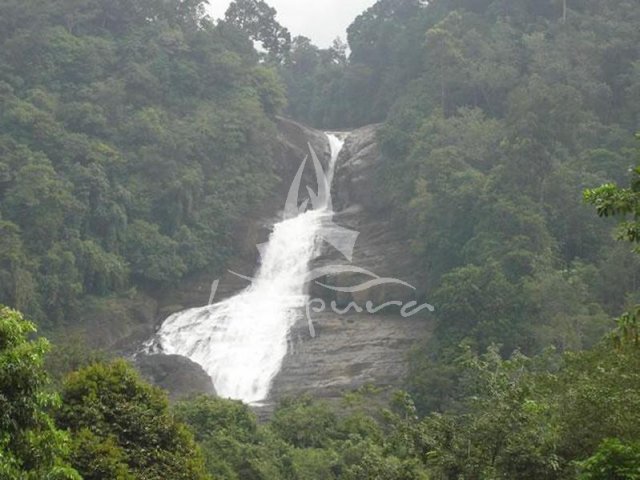
"Bopath Ella", not like many of the others of her kind , finds her abode in a busy surrounding in the village called Devipahala off Kuruwita on A4 High Level road close to Ratnapura. Being within 3 hours driving distance from the capital, it thus claims the honour of having the highest turn-over of enthusiasts seeking respite from the grimy and monotonous town life .Nevertheless, it has the notorious reputation of devouring its visitors off and on who , attracted by the surroundings ,indulge in over-enjoyment .Here again, the falls take the shape of a "Bo" leave ( "Bo" tree is a sacred tree here ) from which the name has been derived.
ANIMALS OF SRI LANKA
MAMMALS
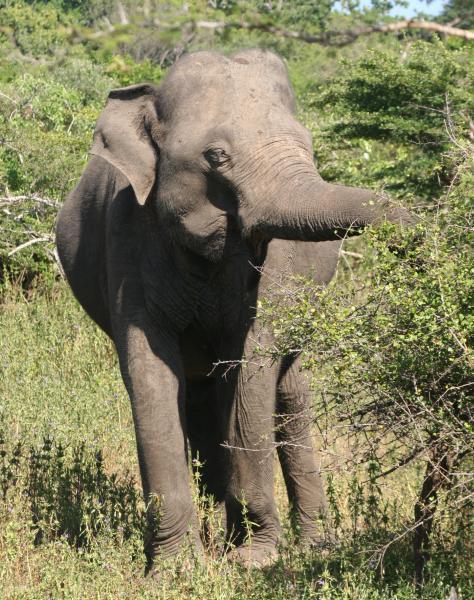
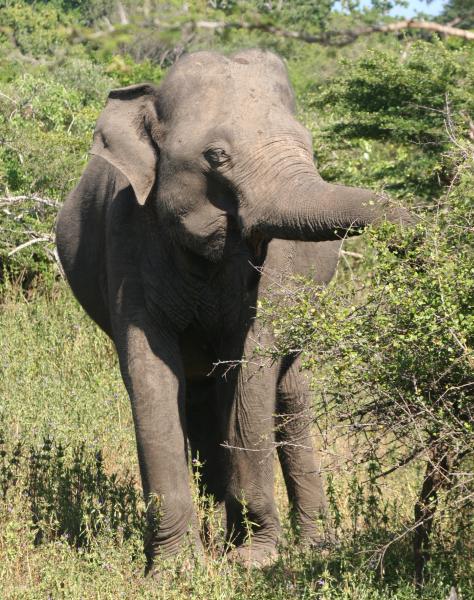
Largest, and perhaps best known of the Sri Lankan wildlife is the Asian Elephant Elephus maximus. The Asian elephant differs from its cousin, the African elephant, in several ways: the Asian is smaller, with shorter ears, a single (not double) "finger" at the end of the trunk, a more rounded back, and 4 nails, instead of 3, on its hind feet. It also has a personality that allows it to be domesticated. That is not to say that when a wild elephant chooses to cross your path in a park you don't get out of its way -- you do! Even in a big vehicle! Sir Lankan elephants don't carry a lot of ivory: most females and many of the males have no tusks at all. Asian elephants live in groups of about 10 animals led by older female. Young males are banished from the group to fend for themselves, although they often form small bachelor herds.
Their are 2 subspecies in the country: Elephus maximus maximus (the Ceylon elephant) and Elephus maximus vilaliya (the Ceylon marsh elephant) and both are listed as endangered. It is estimated that there are perhaps 2500 wild elephants in the country now, as opposed to over 12,000 in 1900. Most live in 7 of the 10 major national parks. Wild elephants that venture into farmlands can sometimes be transported to the parks to live.
Leopard
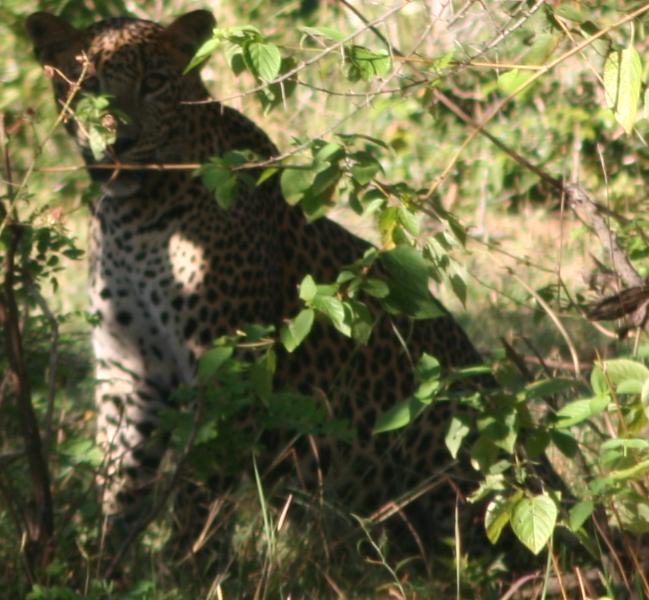
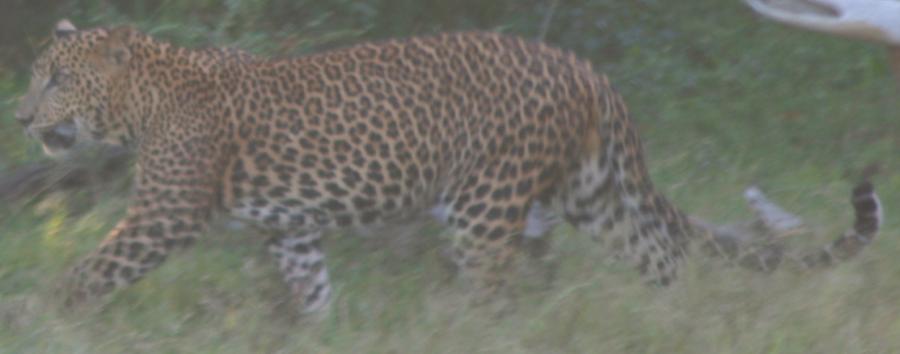
At about 5pm, just an hour before sunset, we were rewarded with a sighting of a Sri Lankan Leopard Pantera pardus kotika in Yala National Park. With only about 35 leopards here, it was quite thrilling! We first saw him (or her) in the bushes by the side of the road where another 4WD vehicle had stopped. We tried to get a photo, but couldn't. The leopard began walking west through the bush, and then, before the other vehicles moved, our driver backed up and took a side track hoping to intersect the leopard on its path. He was right on! We watched as this beautiful animal hid in the bushes (left), keeping us in view, then ambled across the dirt road to the edge of a pond. Spotting a water buffalo ahead, it put on a burst of speed (photo right), but didn't pursue for long. Instead, it decided to climb a huge tree and drape itself over the branches, four legs and long tail swinging freely. Then, with a bit of hesitation but skill it descended the tree head first and walked sedately back into the brush. Fantastic! We had over a half an hour of leopard watching! Sri Lanka's leopards are endemic to the island and are listed by the World Conservation Union as threatened.